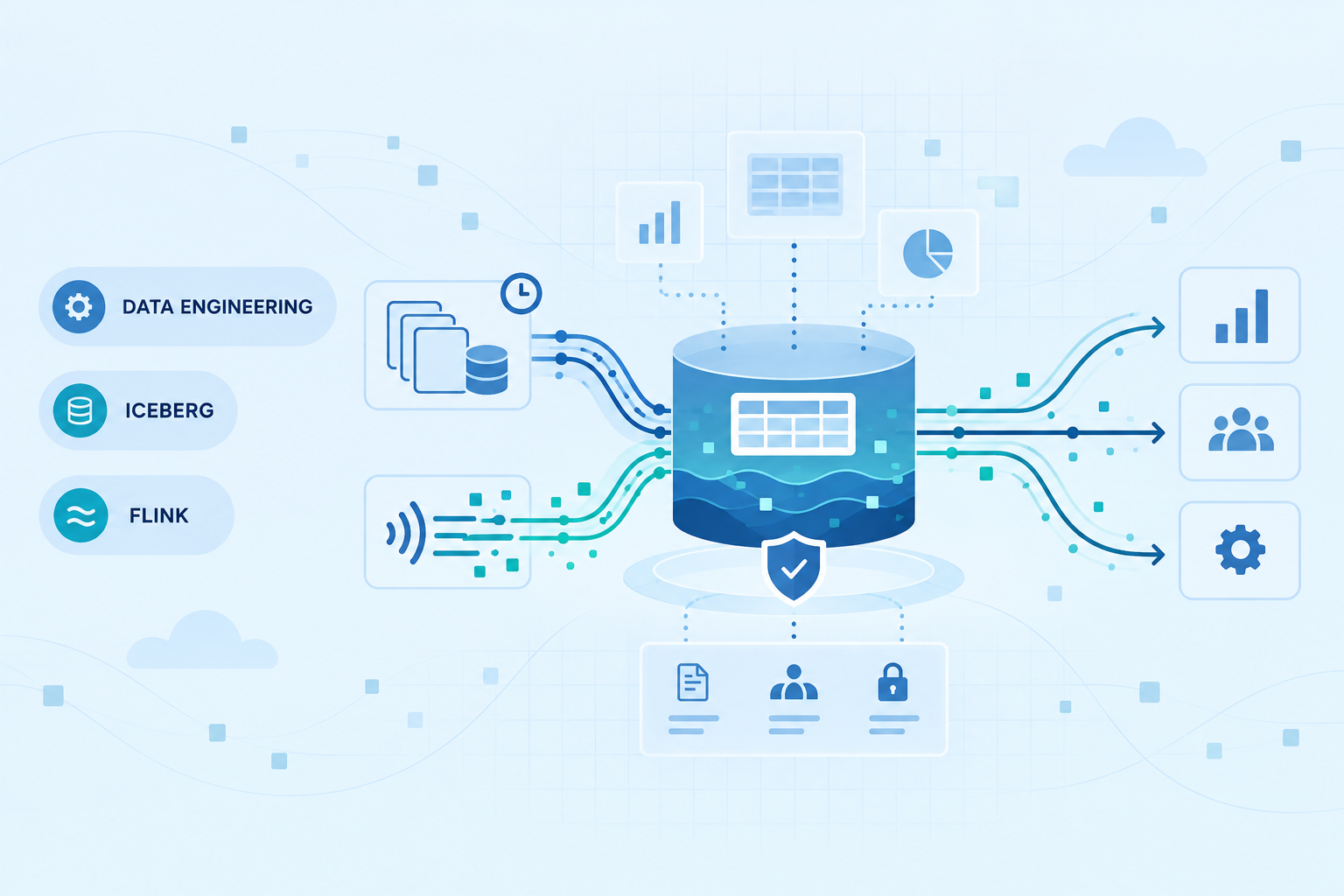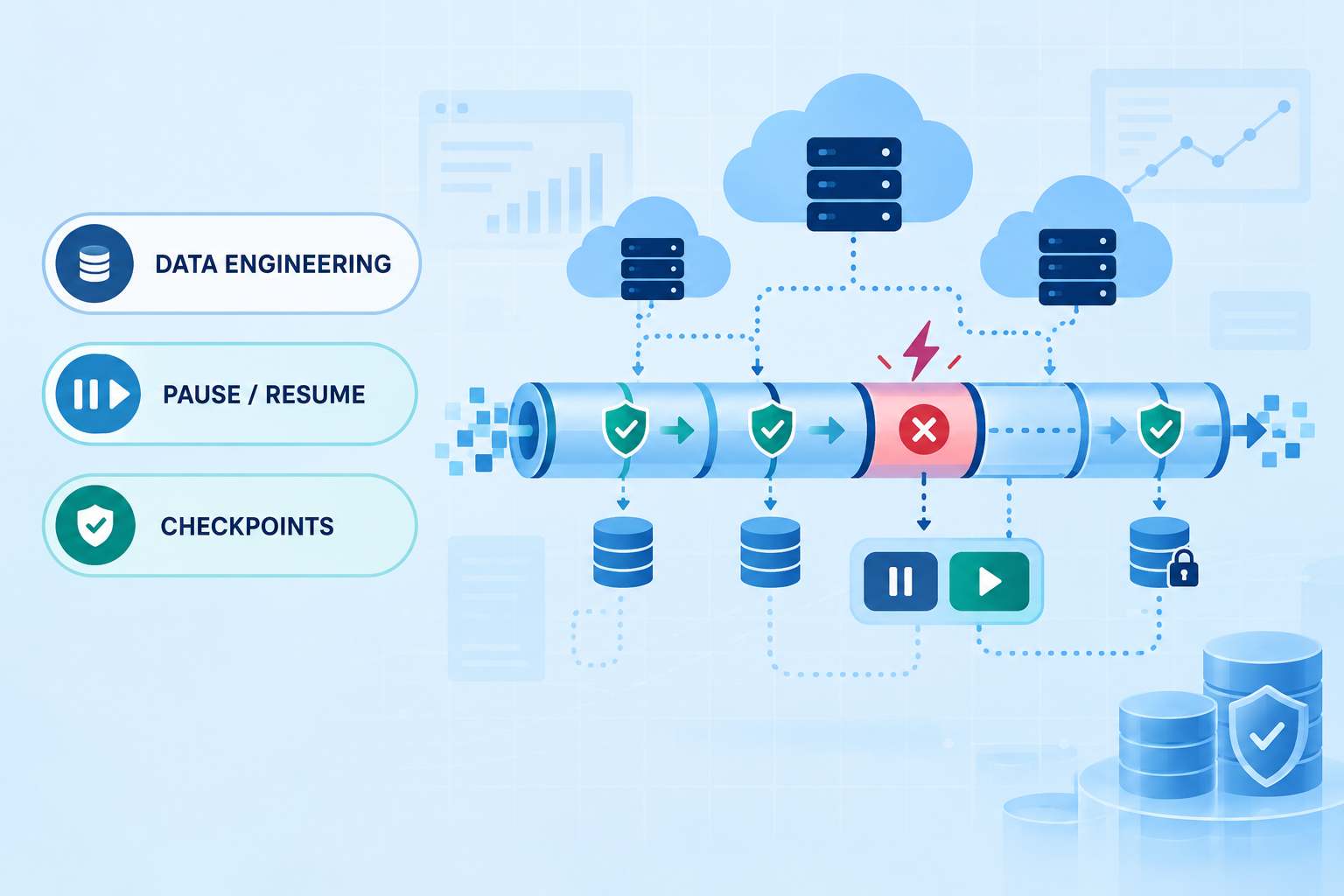


Modernizing an old data lake often fails at the migration boundary rather than the destination. Teams must inventory files, convert types, compact small objects, preserve access, keep production writes flowing, reconcile results and create a rollback path. AWS has introduced managed migration from eligible Apache Hive tables to Apache Iceberg in S3 Tables. The launch supports Parquet-backed Hive tables registered in AWS Glue Data Catalog within the same account and Region.
The service can validate compatibility, copy and transform data, synchronize later changes, and keep the destination read-only until completion. That reduces pipeline engineering, but a managed copy is not the same as an accepted business cutover.
Start with eligibility, not enthusiasm
Inventory source format, catalog registration, Region, account, encryption, partitions, data types, object ownership, update pattern and consumers. Separate supported tables from CSV, ORC, cross-account, multi-Region or unusual SerDe cases. Use the compatibility report as evidence, not as a substitute for understanding the source.
Define the semantic contract
Record row meaning, keys, null handling, timestamp zone, decimals, partition logic, retention and schema evolution. AWS highlights type conversion controls, including timestamp handling. A technically successful conversion can still shift dates, precision or duplicate behavior in a way that breaks finance, IoT or ERP reporting.
Reconcile in layers
Compare object and row counts, min/max timestamps, null rates, key uniqueness, aggregates by business period, checksums where practical, and representative query results. Validate both historical partitions and records arriving during synchronization. Ask domain owners to sign off on measures they actually use.
Test every important engine
Iceberg openness does not guarantee identical behavior across Athena, Spark, BI tools, notebooks and downstream exports. Test schema discovery, predicate pruning, permissions, query plans, time travel, concurrent writes and maintenance. Confirm the destination catalog and REST endpoints fit existing tooling.
Plan a quiet cutover
Run repeated syncs until the remaining delta is small, then schedule the brief source-write pause required for final completion. Freeze schema changes, drain or coordinate writers, record the last accepted source state, complete the workflow, redirect consumers and verify fresh writes. Keep the source unchanged during a defined rollback window.
Price the full lifecycle
The announcement says conversion itself has no charge and customers pay for copied data, but total cost also includes duplicate storage during migration, requests, egress where applicable, green-period testing, new catalog integration and operational review. Measure query cost and maintenance after cutover rather than assuming a format change guarantees savings.
Decommission on purpose
Migration value appears only when duplicate jobs, tables, permissions and dashboards are retired. Archive reports, remove stale access, update lineage and runbooks, and establish Iceberg snapshot and compaction policies. Keep an owner for ongoing schema and quality controls.
The takeaway: managed migration removes plumbing, not accountability. A safe Hive-to-Iceberg move is a sequence of compatibility proof, synchronized copying, business reconciliation, controlled cutover and explicit retirement.
From announcement to dependable operations
Start with a bounded business problem and an accountable owner. Record the current cost, delay, failure rate, and manual work before changing the architecture. Define a measurable outcome, but do not present an estimate as guaranteed savings. Include security, finance, operations, and the people who will support exceptions after launch.
Map the current workflow before selecting technology. Identify the source of truth, approval points, downstream consumers, sensitive data, recovery objectives, and every manual workaround. Decide which step the new capability improves and which steps remain unchanged. This prevents a demonstration from being mistaken for an end-to-end operating solution.
Build a representative pilot with real permissions, data volume, dependency behavior, and user roles. Test peak demand, missing data, stale configuration, denied access, duplicate input, partial failure, recovery, and rollback. Document what continues when the new capability is unavailable. Keep an approved manual path for high-consequence decisions.
Security must be part of the design. Use separate workload identities, short-lived credentials, least privilege, encrypted transport and storage, controlled secrets, and auditable administrative access. Treat retrieved documents, event payloads, model output, and third-party responses as untrusted input. Validate every action at the boundary where it affects money, data, equipment, customers, or regulated records.
Cost controls need similar depth. Tag usage to a product and owner, define budgets and anomaly thresholds, measure cost per successful business outcome, and include integration, support, data movement, licensing, and training. A lower infrastructure bill can be offset by more exceptions or human correction. Evaluate total process cost rather than one service price.
Operate the result like a product. Monitor availability, latency, unit cost, data quality, security findings, user adoption, exceptions, and support effort. Version configurations and decision rules. Log changes and approvals. Review whether the capability still solves the original problem as prices, products, and workflows evolve.
Prepare the support model before launch. Give responders dashboards, runbooks, ownership, escalation paths, and safe diagnostic access. Alert on stale data and silent degradation, not only complete failure. Practice a dependency outage and verify that queued work, retries, reconciliation, and user communication behave as designed.
Change management is also technical risk control. Explain what users should trust, what they must verify, and how they report a wrong result. Train with real scenarios and capture overrides as useful feedback. Do not measure adoption by logins alone; measure whether the process becomes faster, safer, or more accurate.
Maintain a decision record that states why the technology was selected, which alternatives were considered, which risks were accepted, and what would trigger redesign or retirement. Review it after incidents and major vendor changes. Portability does not require avoiding managed services; it requires knowing which data, contracts, identities, and operational procedures must survive a change.
Expansion should follow evidence. Compare the pilot with its baseline, include the cost of integration and governance, and retire components that no longer earn their complexity. A new feature creates value only when teams can understand it, control it, recover it, and improve it without depending on one specialist.
Finally, schedule a formal review after thirty and ninety days. Ask whether users changed behavior, whether exceptions moved elsewhere, and whether actual costs match the forecast. Publish the findings to sponsors and delivery teams. If value is weak, narrow the scope or stop. Responsible innovation includes the ability to end an experiment cleanly.
Sources
- AWS News Blog — Managed Hive-to-Iceberg migration for S3 Tables
- AWS — S3 Tables managed migration announcement
Build it with Cogniquaint experts
Cogniquaint’s data engineering experts can inventory Hive estates, classify migration eligibility, design type and reconciliation controls, test Iceberg consumers, orchestrate low-risk cutover, and retire duplicate pipelines so modernization lowers operational effort instead of creating another lake copy.
Work with Cogniquaint
Ready to elevate your operations with AI-powered insights?
Get in touch with us to build your next intelligent solution.