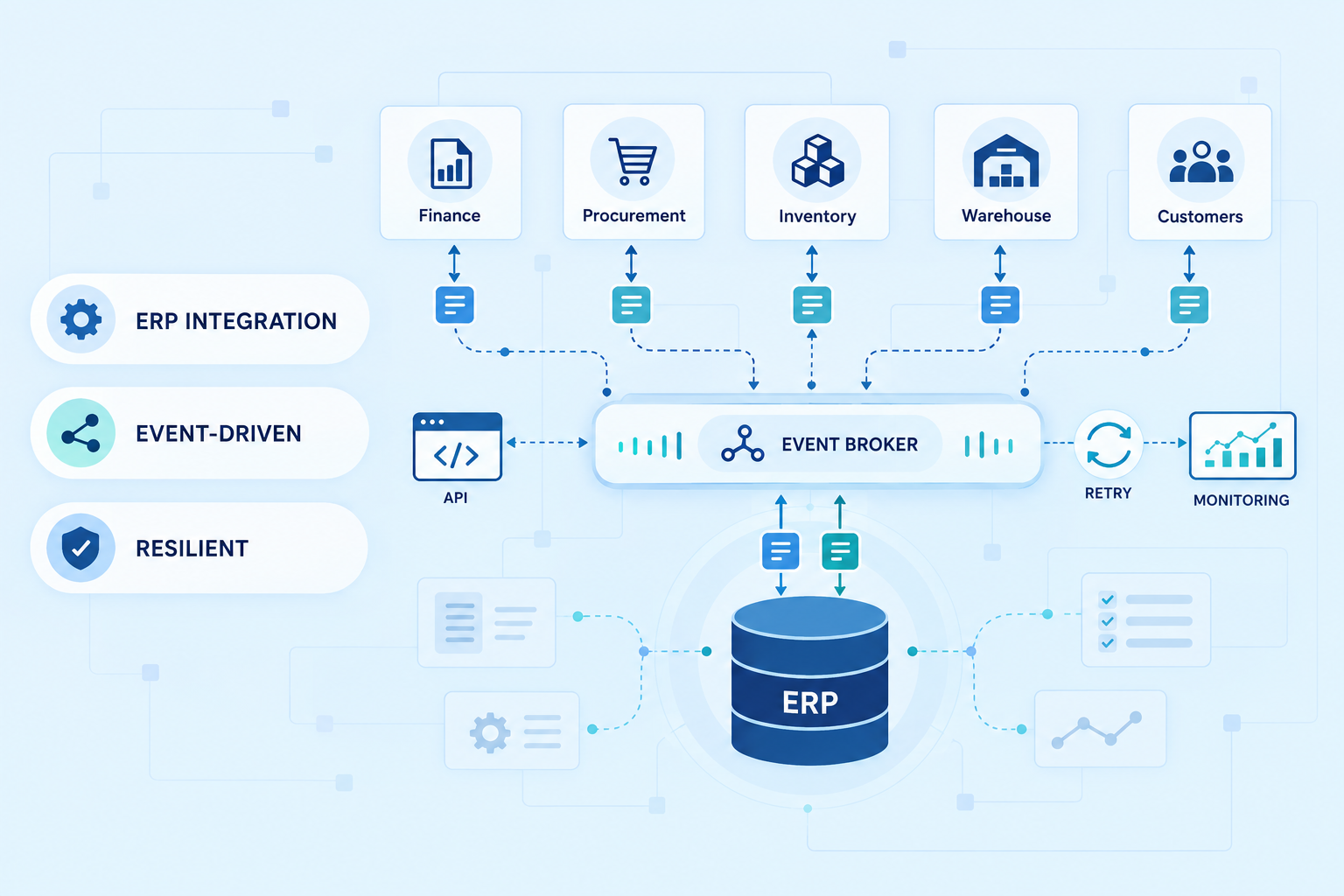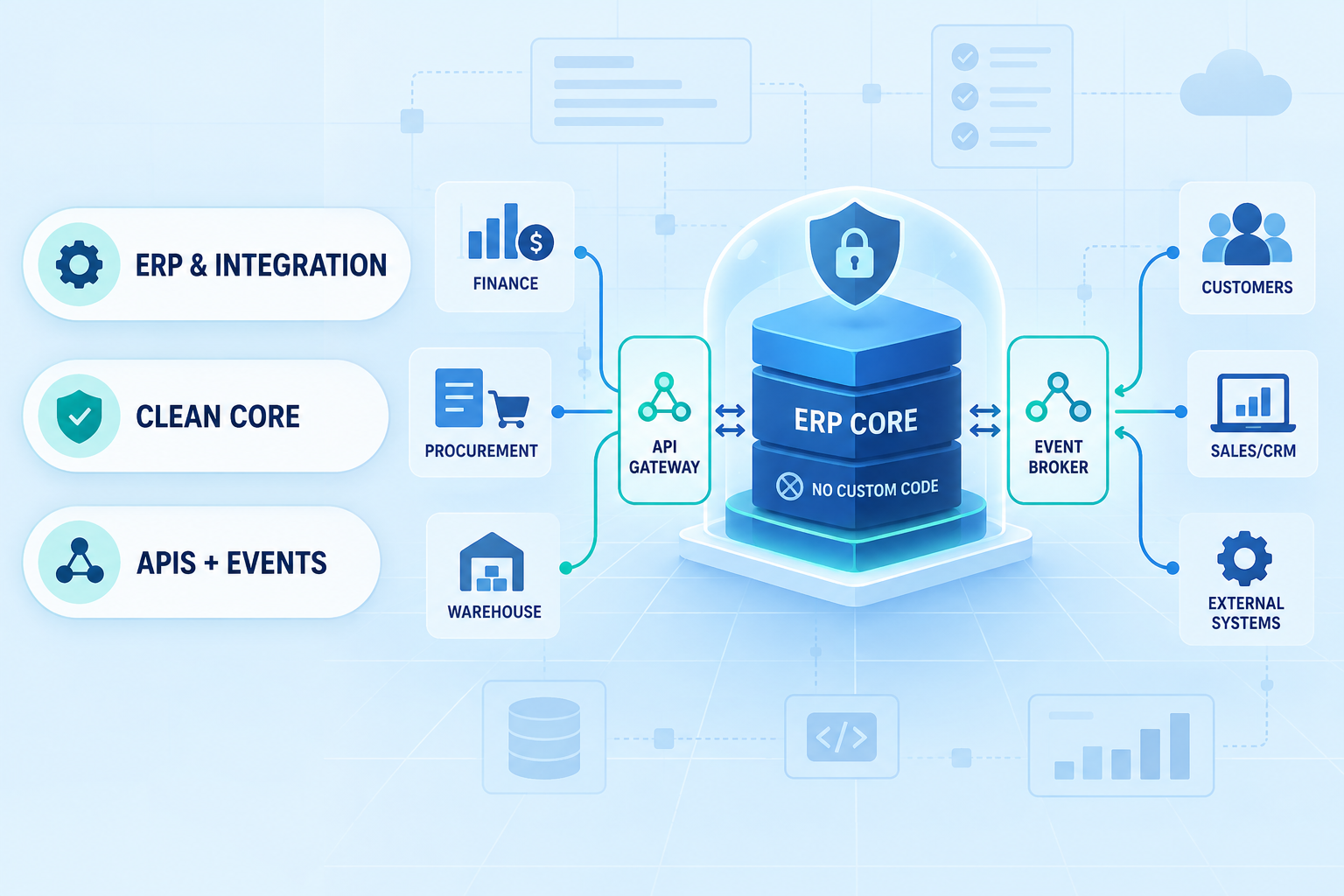


Most enterprise automation stops at the company boundary. A shortage may be detected inside ERP, but confirming a substitute, changing a delivery date, reprioritizing an order, or accepting a quality deviation involves suppliers, logistics providers, plants, finance, and customers. SAP recently described a vision for agentic AI across business networks, using shared operational context to recommend and execute work within organizational guardrails.
The opportunity is faster coordination. The risk is allowing an agent owned by one party to create financial, quality, compliance, or production consequences for another without an agreed operating contract.
Define the decision rights
List actions by consequence: read status, propose a change, reserve capacity, alter quantity, substitute material, change price, expedite freight, release quality, or cancel an order. For each, name the proposing party, approving role, authoritative system, financial limit, evidence required, and reversal path. Keep high-impact or safety-related decisions under explicit human approval.
Bind every action to an identity
Use organization, user, workload, and agent identities rather than shared integration accounts. Authorize the specific transaction, supplier, plant, value, and time window. A sourcing agent should not inherit broad ERP posting rights merely because it can read a purchase order.
Carry context with the proposal
A recommendation should show inventory, demand, capacity, lead time, quality status, contract terms, risk signals, assumptions, and freshness. Distinguish facts supplied by a partner from inferred values. Record which model, rules, tools, and source versions produced the proposal so both sides can investigate later.
Protect commercial boundaries
Network data can reveal pricing, volume, capacity, customers, and constraints. Apply purpose limitation, tenant isolation, field-level controls, retention, consent, and contractual restrictions. Do not let an optimization agent learn one supplier’s confidential terms and apply them in another negotiation.
Design exception collaboration
Automation should create a shared case when confidence is low, rules conflict, or a partner rejects a change. The case needs owners, deadlines, attachments, comments, status, and a route back to ERP, planning, quality, and logistics. Avoid parallel email decisions that leave the business transaction unchanged.
Test failure between companies
Simulate duplicate messages, stale availability, delayed acknowledgements, partial acceptance, currency or unit mismatch, revoked authorization, and one partner going offline. Use idempotent transaction identifiers and reconciled state. Never infer acceptance from silence.
Measure mutual outcomes
Track disruption response time, confirmation latency, expedite cost, stockouts, schedule adherence, quality escapes, rejected proposals, overrides, and partner effort. A buyer’s local saving is not network value if it transfers excessive cost or risk to a supplier.
The takeaway: agentic collaboration becomes trustworthy when every cross-company action remains attributable, authorized, explainable, reversible, and fair enough for partners to keep participating.
From announcement to dependable operations
Start with a bounded business problem and an accountable owner. Record the current cost, delay, failure rate, and manual work before changing the architecture. Define a measurable outcome, but do not present an estimate as guaranteed savings. Include security, finance, operations, and the people who will support exceptions after launch.
Map the current workflow before selecting technology. Identify the source of truth, approval points, downstream consumers, sensitive data, recovery objectives, and every manual workaround. Decide which step the new capability improves and which steps remain unchanged. This prevents a demonstration from being mistaken for an end-to-end operating solution.
Build a representative pilot with real permissions, data volume, dependency behavior, and user roles. Test peak demand, missing data, stale configuration, denied access, duplicate input, partial failure, recovery, and rollback. Document what continues when the new capability is unavailable. Keep an approved manual path for high-consequence decisions.
Security must be part of the design. Use separate workload identities, short-lived credentials, least privilege, encrypted transport and storage, controlled secrets, and auditable administrative access. Treat retrieved documents, event payloads, model output, and third-party responses as untrusted input. Validate every action at the boundary where it affects money, data, equipment, customers, or regulated records.
Cost controls need similar depth. Tag usage to a product and owner, define budgets and anomaly thresholds, measure cost per successful business outcome, and include integration, support, data movement, licensing, and training. A lower infrastructure bill can be offset by more exceptions or human correction. Evaluate total process cost rather than one service price.
Operate the result like a product. Monitor availability, latency, unit cost, data quality, security findings, user adoption, exceptions, and support effort. Version configurations and decision rules. Log changes and approvals. Review whether the capability still solves the original problem as prices, products, and workflows evolve.
Prepare the support model before launch. Give responders dashboards, runbooks, ownership, escalation paths, and safe diagnostic access. Alert on stale data and silent degradation, not only complete failure. Practice a dependency outage and verify that queued work, retries, reconciliation, and user communication behave as designed.
Change management is also technical risk control. Explain what users should trust, what they must verify, and how they report a wrong result. Train with real scenarios and capture overrides as useful feedback. Do not measure adoption by logins alone; measure whether the process becomes faster, safer, or more accurate.
Maintain a decision record that states why the technology was selected, which alternatives were considered, which risks were accepted, and what would trigger redesign or retirement. Review it after incidents and major vendor changes. Portability does not require avoiding managed services; it requires knowing which data, contracts, identities, and operational procedures must survive a change.
Expansion should follow evidence. Compare the pilot with its baseline, include the cost of integration and governance, and retire components that no longer earn their complexity. A new feature creates value only when teams can understand it, control it, recover it, and improve it without depending on one specialist.
Finally, schedule a formal review after thirty and ninety days. Ask whether users changed behavior, whether exceptions moved elsewhere, and whether actual costs match the forecast. Publish the findings to sponsors and delivery teams. If value is weak, narrow the scope or stop. Responsible innovation includes the ability to end an experiment cleanly.
Sources
Build it with Cogniquaint experts
Cogniquaint’s ERP, integration, AI and supply-chain experts can map cross-company decision rights, design agent identities and approval limits, connect business-network events with ERP and plant systems, implement exception workflows, and test reconciliation before autonomous actions affect trading partners.
Work with Cogniquaint
Ready to elevate your operations with AI-powered insights?
Get in touch with us to build your next intelligent solution.