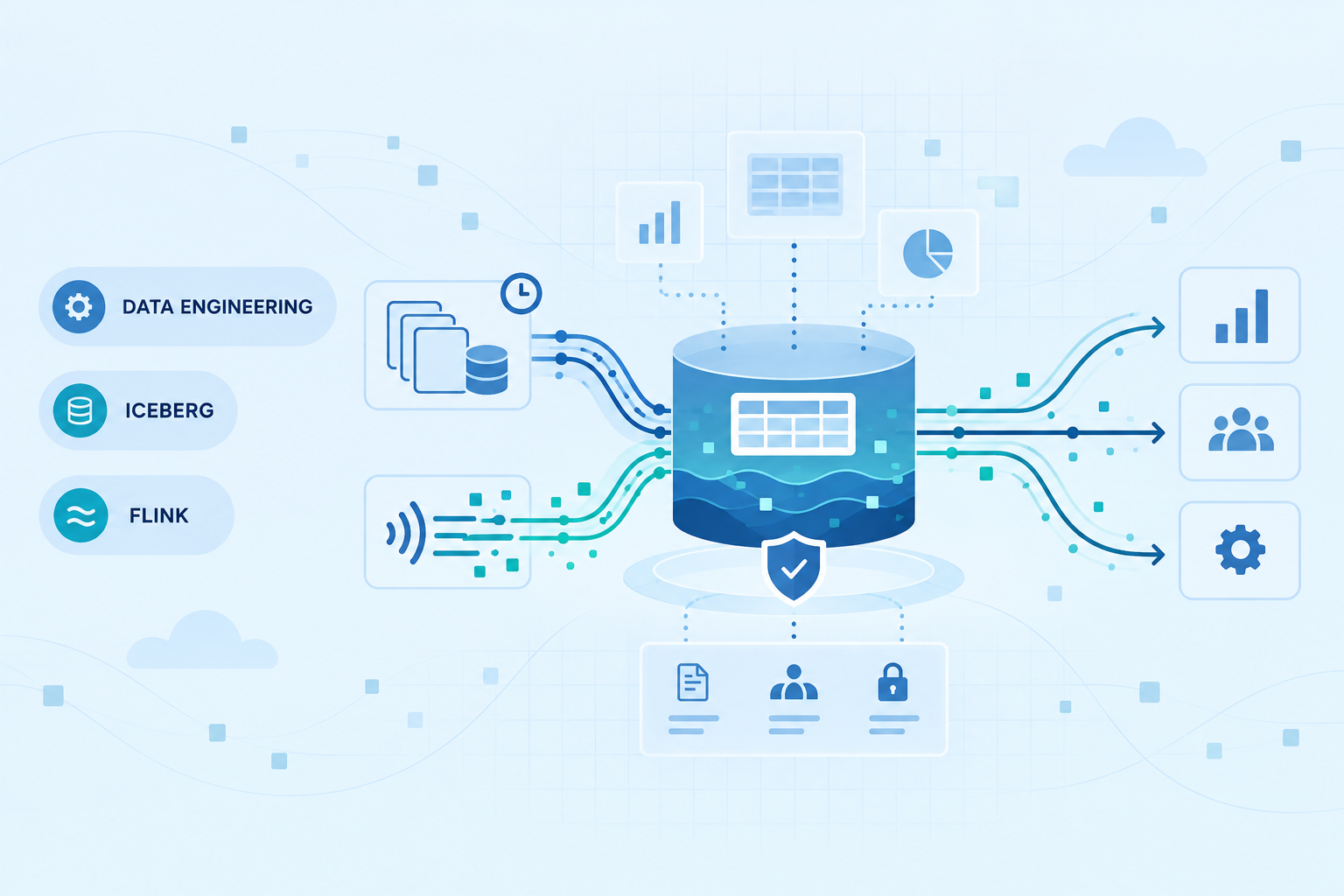


Data teams often classify a source column as personal, confidential or regulated, then lose that context when a pipeline creates a new table. Databricks added tag propagation in beta on October 12. The feature uses recorded lineage to copy governed tags from source tables and columns to supported derived tables and views. When an attribute-based access-control policy references the propagated tag, the policy can apply to the derived object too.
The direction is valuable: classification should travel with data. Yet automatic propagation is not a substitute for understanding transformation semantics or testing the security boundary.
Begin with a small governed vocabulary
Define tags that drive clear decisions, such as sensitivity level, personal-data class, retention category or approved business domain. Limit allowed values and assign accountable owners. A sprawling taxonomy creates conflicts and makes policy behavior hard to explain. Remember that people who can change security-relevant tags may change which policies apply.
Map the supported lineage path
Document which pipelines use supported operations and serverless compute. The beta documentation notes limits: custom ungoverned tags do not propagate, streaming tables and materialized views created by Lakeflow Declarative Pipelines are not supported, and some securable types are outside scope. Path-based table references and user-defined functions can also reduce lineage detail. Treat gaps as explicit control work, not invisible exceptions.
Design for asynchronous enforcement
Propagation runs after the data operation. Databricks warns there is a short period before the propagated tag appears and an ABAC policy that depends on it is enforced. For highly sensitive data, do not expose a newly created target immediately. Place it in a restricted staging scope, verify classification, then promote access. Monitor propagation delay and failed or conflicted assignments.
Resolve conflicts conservatively
A derived dataset may combine sources with different sensitivity values. Configure a deterministic default, normally the more restrictive classification, and test joins, unions and inserts. Surface the reason for the result so stewards can distinguish a direct, inherited, automated and propagated assignment.
Validate with adversarial transformations
Build tests for renamed columns, calculated fields, dropped identifiers, hashed values, nested structures, merges and schema changes. Check both metadata and actual access with representative identities. A tag may follow a column even when the business meaning changes; conversely, a transformation may create sensitive information from inputs that were not individually sensitive.
Operate propagation as a control
Track coverage, delay, conflicts, overrides, policy evaluations and unclassified derived assets. Alert when a sensitive source produces an untagged target. Review taxonomy and policy changes through change control, and retain evidence for audit.
The practical takeaway: lineage-based propagation can reduce classification drift, but its safest use is defense in depth. Restrictive defaults, staged exposure and continuous verification are what turn automatic metadata into dependable data protection.
From announcement to dependable operations
Start with a bounded business problem and an accountable owner. Record the current cost, delay, failure rate, and manual work before changing the architecture. Define a measurable outcome, but do not present an estimate as guaranteed savings. Include security, finance, operations, and the people who will support exceptions after launch.
Map the current workflow before selecting technology. Identify the source of truth, approval points, downstream consumers, sensitive data, recovery objectives, and every manual workaround. Decide which step the new capability improves and which steps remain unchanged. This prevents a demonstration from being mistaken for an end-to-end operating solution.
Build a representative pilot with real permissions, data volume, dependency behavior, and user roles. Test peak demand, missing data, stale configuration, denied access, duplicate input, partial failure, recovery, and rollback. Document what continues when the new capability is unavailable. Keep an approved manual path for high-consequence decisions.
Security must be part of the design. Use separate workload identities, short-lived credentials, least privilege, encrypted transport and storage, controlled secrets, and auditable administrative access. Treat retrieved documents, event payloads, model output, and third-party responses as untrusted input. Validate every action at the boundary where it affects money, data, equipment, customers, or regulated records.
Cost controls need similar depth. Tag usage to a product and owner, define budgets and anomaly thresholds, measure cost per successful business outcome, and include integration, support, data movement, licensing, and training. A lower infrastructure bill can be offset by more exceptions or human correction. Evaluate total process cost rather than one service price.
Operate the result like a product. Monitor availability, latency, unit cost, data quality, security findings, user adoption, exceptions, and support effort. Version configurations and decision rules. Log changes and approvals. Review whether the capability still solves the original problem as prices, products, and workflows evolve.
Prepare the support model before launch. Give responders dashboards, runbooks, ownership, escalation paths, and safe diagnostic access. Alert on stale data and silent degradation, not only complete failure. Practice a dependency outage and verify that queued work, retries, reconciliation, and user communication behave as designed.
Change management is also technical risk control. Explain what users should trust, what they must verify, and how they report a wrong result. Train with real scenarios and capture overrides as useful feedback. Do not measure adoption by logins alone; measure whether the process becomes faster, safer, or more accurate.
Maintain a decision record that states why the technology was selected, which alternatives were considered, which risks were accepted, and what would trigger redesign or retirement. Review it after incidents and major vendor changes. Portability does not require avoiding managed services; it requires knowing which data, contracts, identities, and operational procedures must survive a change.
Expansion should follow evidence. Compare the pilot with its baseline, include the cost of integration and governance, and retire components that no longer earn their complexity. A new feature creates value only when teams can understand it, control it, recover it, and improve it without depending on one specialist.
Finally, schedule a formal review after thirty and ninety days. Ask whether users changed behavior, whether exceptions moved elsewhere, and whether actual costs match the forecast. Publish the findings to sponsors and delivery teams. If value is weak, narrow the scope or stop. Responsible innovation includes the ability to end an experiment cleanly.
Sources
Build it with Cogniquaint experts
Cogniquaint’s data-governance specialists can define a workable tag taxonomy, map lineage coverage, design ABAC policies, test propagation gaps and conflicts, and build monitoring that proves sensitive classifications continue to protect derived data.
Work with Cogniquaint
Ready to elevate your operations with AI-powered insights?
Get in touch with us to build your next intelligent solution.